My Blog List

  • Love Quotes For Her - Perhaps you may call it ridiculous but cute quotes for your boyfriend can keep the love fires blazing hot. Cute quotes aren't only words and phrases, they...
    13 years ago

Saturday, 5 January 2013

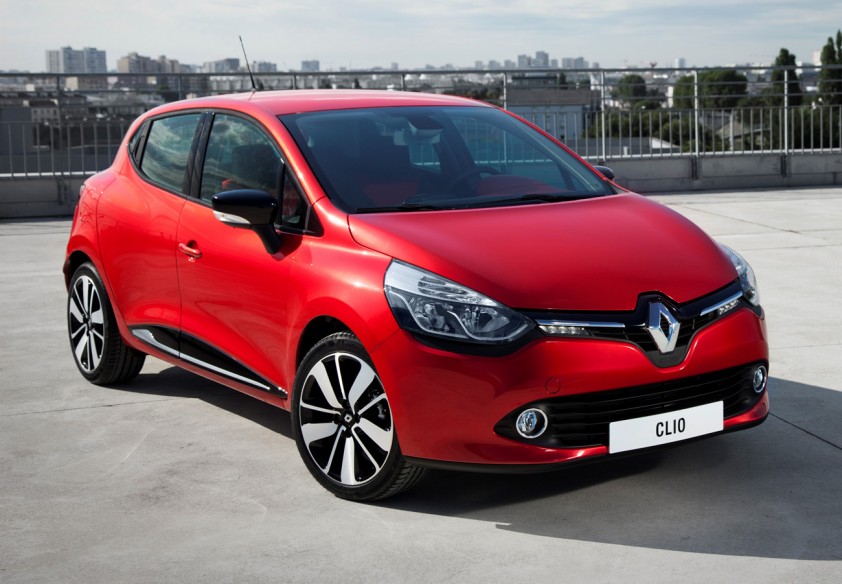
2013 Renault Clio RS 200


The announcement of a new performance version of Clio is always an eagerly anticipated event among the model's fanbase and those who appreciate beautiful cars. Powered by a 1.6 litre turbocharged engine mated to EDC dual clutch transmission, New Renault Clio RS 200 Turbo is an innovative response to the highly sophisticated expectations of the compact sports hatchback customer. In addition to being thrilling to drive, it has distinctive style and is poised to be a favourite with the connoisseurs.

2013 Renault Clio RS 200

2013 Renault Clio RS 200

2013 Renault Clio RS 200

2013 Renault Clio RS 200

2013 Renault Clio RS 200

2013 Renault Clio RS 200

2013 Renault Clio RS 200

2013 Renault Clio RS 200

"New Clio Renaultsport 200 Turbo proclaims loud and clear the values of Renault Sport: beautiful and fast, it has everything that's needed to make it the benchmark car in the high-performance sports hatchback class - just like its predecessors. The introduction of a very high performance turbocharged engine, with plenty of torque at low revs and coupled to the EDC dual clutch transmission (Efficient Double Clutch) developed by Renault Sport engineers, results in a car that raises the performance driving experience to a new level. The expertise of Renault Sport Technologies is reinforced by long-term programmes in the most demanding types of motorsport, including racing and rallying. It is this experience which makes us so passionate about handling feedback, and you can feel this the moment you drive any of the Renault performance derivatives we have developed. We're also proud to be producing the Renaultsport in Dieppe, home of Alpine, and delighted to be using the EDC gearbox in a Renaultsport version for the first time." - Patrice Ratti Managing Director, Renault Sport Technologies.

Beautiful and effective, with a racing pedigree

There can be no doubt about it: New Clio Renaultsport 200 Turbo is a Renault Sport model through and through. Its F1-style front blade recalls Renault's success in Formula One, while its diffuser and spoiler generate 80 per cent and 20 per cent extra downforce respectively. Also exclusive to New Clio Renaultsport 200 Turbo are the unique grille and spoiler, front and rear bumper, wide-set LED daytime running lights, sill extensions and 17-inch wheels, with 18- inch rims available as an option. All these elements combine to make it a genuine attention grabber. A dual-tailpipe exhaust system and a sporty sound signature round off this exclusive package.

Inside, the ambience is sporting, with red the dominant colour. A steering wheel flanked by two gearshift paddles, a dedicated instrument pack and aluminium-capped pedals all spell performance and passion. Yet, Clio Renaultsport 200 Turbo also pays particular attention to the comfort of its occupants. The bucket seats, with leather upholstery optional, provide extra lateral support and it goes without saying that Renaultsport's latest comes with all the equipment expected of a flagship model: multimedia system, touchscreen navigation, Bluetooth® radio with USB connectivity, hands-free entry and starting, driver aids. Climate control and parking sensors are also available as options.

Personalisation

New Clio Renaultsport 200 Turbo will be offered with a specific Renault Sport exterior personalisation programme. The starting point for it is the choice of four themes which can be combined with different motifs, plus upgrade elements and trim packs, with clearly differentiated characters. Now everyone can configure the precise type of sportiness that suits them best.

1.6 Turbo Renault Sport 200, a completely new 1.6 turbocharged engine coupled with the EDC dual clutch transmission and paddle gearchanges

Coupled with the EDC gearbox, the new 1.6 Turbo Renaultsport 200 engine is exclusive to the New Clio flagship - an indication of another step forward by Renault Sport Technologies in its quest for performance. The aim is to offer even more everyday driving enjoyment thanks to extra verve, but also to reconcile enjoyment and performance improvements with the realistic requirement for improved energy efficiency.

This approach, driven by motorsport and particularly by Formula One where Renault Sport enjoys recognised expertise, has now directly benefited the sporty version of New Clio.

The new 16-valve four-cylinder develops 200 horsepower at 6,000 rpm. Its high torque of 240 Nm (up 25 Nm compared with Clio III Renaultsport) is developed from just 1,750 rpm for instantaneous driving enjoyment. This maximum torque is then consistently available at higher revs - up to 5,600 rpm - thanks to the turbocharger.

Sprinkled with the magic dust of Renault Sport, this Alliance engine includes cutting edge technologies, demonstrated by the DLC (Diamond Like Carbon) cam followers developed from Formula One and Variable Valve Timing (VVT). As always with Renault Sport, the exhaust note has been the object of particular attention.

The other new feature in the sporty philosophy is that the 1.6 Turbo Renault Sport 200 engine is available exclusively with the EDC dual clutch, six-speed transmission. The comfort and efficiency of the dual clutch EDC gearbox allows drivers to adopt the driving style they want. The EDC transmission is docile in daily driving and particularly effective in sporty driving, with three different modes including a 'race' option.

Inspired by motorsport, the steering column-mounted gear shift paddles - a first for Renault - offer better comfort and speed than a manual gearbox. In 'race' mode, gear changes can be made in just 150 milliseconds.

The quality of the Renaultsport chassis

To cover the varied expectations and usage from sporty customers, New Clio Renaultsport 200 Turbo offers two different chassis:
  • Sport chassis for an optimum balance of sportiness and comfort in everyday motoring.
  • Cup chassis for technical and track day enthusiasts. These customers will enjoy 15 per cent more stiffness relative to the Sport chassis and a ride height lowered by 5 mm.

This twin offer is a distinctive feature of Renaultsport models.

In terms of braking, New Clio Renaultsport 200 Turbo offers powerful 320mm-diameter discs at the front (a significant increase of 8mm over its predecessor). More than ever, Renault Sport is synonymous with excellence in terms of chassis performance and braking.

Thanks to this careful balance between the engine, transmission and chassis, the New Clio Renaultsport 200 Turbo will offer 'edgy' performance. Timed performance data will be communicated during media test drives planned in early 2013.

Topped off with exciting innovations

New Renault Clio Renaultsport 200 Turbo combines fun with technology, in the form of a 'sport' button named R.S. Drive. Pressing the button modifies the engine and gearbox mapping, ESC settings, steering feeling and throttle pedal response. It works in three modes ('Normal', 'Sport' and 'Race') and gives the new model an attractive, multi-dimensional sporty character.

In the same spirit, Renault's engineers have adapted R-Sound Effect for the New Clio Renaultsport 200 Turbo by adding specific engine noises. Using Renault R-Link, this application simulates the noise of one of a range of iconic engines through the car's speakers, tuning it to the speed and acceleration of the car. It's a fun and realistic way of choosing the engine noise.

In addition to this bundle of new features, New Clio Renaultsport 200 Turbo offers an enviable range of comfort features such as touchscreen navigation Renault R-Link, a hands-free key card, Bluetooth radio with USB and jack connections. Options include parking sensors with rear camera and climate control. Being sporty doesn't mean that the wellbeing of occupants cannot be looked after.

New Renault Clio Renaultsport 200 Turbo: sporty performance can also be energy-efficient

New Renault Clio RS 200 Turbo will also significantly reduce its impact on the environment thanks to new technologies which stem from the ongoing quest for energy efficiency seen in motorsport.

Downsizing + EDC = 25% cut in CO2 emissions compared with Clio III Renaultsport

In concrete terms, Renault Sport's application of the downsizing principle to performance engines means that the 1.6 Turbo Renault Sport 200 engine will use two litres/100km less fuel for an equivalent power output, plus 25Nm of extra torque compared with Clio III Renaultsport's naturally-aspirated 2.0 (F4R) powerplant.

Although the new turbocharged 1.6-litre engine uses less fuel, it also delivers higher performance and extra enjoyment than its predecessor.

The technologies employed for New Clio Renaultsport 200 Turbo underline the talent of Renault's engine specialists: direct fuel-injection, DLC (Diamond Like Carbon) cam followers (a technology derived from F1), braking energy recovery (ESM), reduced friction, Variable Valve Timing.

DIEPPE: THE REALM OF THE EXCEPTIONAL NEW CLIO RENAULTSPORT 200 TURBO

Renault Sport Technologies utilises the very best of Renault's expertise to develop and improve standard production vehicles. Cars in the Renaultsport range deliver very high levels of customer satisfaction: their strengths include excellent road holding, tremendous agility, powerful braking, occupant comfort, user-friendly cabin layouts and exceptionally high standards of perceived quality. It was therefore only natural that the home of Clio Renaultsport should also become that of its latest incarnation.

Historically, the Dieppe factory has a fine sporting reputation: it was founded by Alpine and is today inextricably associated with the Clio Renaultsport. and has a rich heritage upon which the Group has capitalised. Dieppe applies the same exacting qualitative standards as the Flins factory, which supplies unpainted Clio shells. The teams in Dieppe then carry out complementary fine-tuning to embellish a fine standard vehicle with added sporting flair - the distinctive finishing touches that customers expect. This can clearly be seen from a number of features and signature details, such as the Renaultsport bucket seats.

Articles Source : Netcarshow

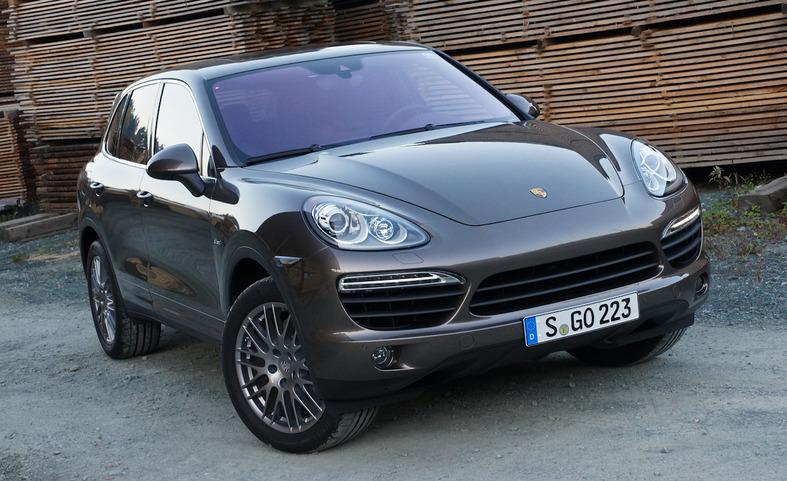
2013 Porsche Cayenne S Diesel


In the new Porsche Cayenne S Diesel, engine power and intelligent all-wheel drive interact in an incomparable way: 850 Newton-metres of torque and Porsche Traction Management (PTM). This is the first time that Porsche is employing an eight-cylinder diesel, which immediately assumes the top position in its market segment for power, torque and efficiency.

2013 Porsche Cayenne S Diesel

2013 Porsche Cayenne S Diesel

2013 Porsche Cayenne S Diesel

2013 Porsche Cayenne S Diesel

2013 Porsche Cayenne S Diesel

2013 Porsche Cayenne S Diesel

2013 Porsche Cayenne S Diesel

2013 Porsche Cayenne S Diesel

2013 Porsche Cayenne S Diesel

2013 Porsche Cayenne S Diesel

2013 Porsche Cayenne S Diesel

2013 Porsche Cayenne S Diesel

It is also the world's only diesel V8 to offer an automatic start/stop function in this market segment. While the Cayenne Diesel with a V6 engine represents top efficiency with as much sporty performance as possible, the new Porsche Cayenne S Diesel impressively demonstrates top sports performance with as much efficiency as possible. The new V8 engine with two turbochargers always keeps a powerhouse of energy in store for the driver to call up at any time; it reacts with sporty spontaneity and performs with excellent efficiency under all circumstances. The PTM distributes the engine's powerful propulsive forces according to the specific driving situation, precisely and individually to all four wheels; in interplay with the Cayenne chassis it converts this power into forward propulsion and dynamic performance with unrivalled effectiveness. The optional Porsche Torque Vectoring (PTV Plus) distributes engine power in an even sportier way.

The Porsche Cayenne S Diesel offers a driving experience that is typical of a Porsche and is yet completely new. It is emotional like a sports car, with regard to both its vehicle dynamics and its sound. Smooth engine running and the sound of an eight-cylinder reach the same levels as those of previous Porsche V8 engines. Yet, its diesel operating principle yields a level of fuel economy that makes the Cayenne S Diesel an ideal and comfortable touring vehicle for long trips: based on NEDC fuel consumption values, the car can cover about 1,200 km on a single fill of the optional 100-litre fuel tank.

The Porsche Cayenne S Diesel gets its very special character from the active PTM all-wheel drive system. It embodies the bundled Porsche competence in all-wheel drive technology. Its direct rear-axle drive gives it the driving behaviour of a rear-wheel drive vehicle - with all of the benefits in handling and precision. In a sporty and dynamic style of driving, the added effects of front-wheel drive develop in a way that is precisely adapted to the driving situation and enhances stability and traction. This situation-based intelligence of PTM also gives the Cayenne S Diesel excellent capabilities in classic measures of offroad performance. On surfaces with little grip - e.g. snow, mud or moist grass - PTM, in coordination with Porsche Stability Management (PSM), allows as much drive torque to be applied to each individual wheel as they can transmit effectively without loss of grip. Its dominant high-powered engine also makes the Porsche Cayenne S Diesel the ideal vehicle when it comes to towing and manoeuvring boat or horse trailers. Even when its maximum towing capacity of 3.5 metric tonnes is exploited, the Porsche Cayenne S Diesel still has ample power reserves in all of life's driving situations.

On its exterior, the new top diesel model is also a Cayenne S without compromises, and it bears the typical characteristics of the eight-cylinder variants. Black fins at the front highlight the open air inlets. Together with the silver-coloured brake callipers, this emphasises the sporty character of the new member of the model range. As in the Cayenne Diesel, "diesel" badges on both front wings refer to the operating principle of its V8 engine. The model logo at the rear identifies it as a Cayenne S. The standard Cayenne S III wheels create a visual accent and enable a high level of driving performance both onroad and offroad.

Articles Source : NetcarShow

Friday, 4 January 2013

2013 Renault Clio Estate


New Renault Clio Estate was one of the major revelations on Renault's stand at the 2012 Paris Motor Show. The newcomer shares the same dynamic breeding as the hatchback but has its own distinct identity, with carefullyhoned forms created by designer Yohann Ory. New Renault Clio Estate will appear in dealerships from the first quarter of 2013 (depending on market).

2013 Renault Clio Estate

2013 Renault Clio Estate

2013 Renault Clio Estate

2013 Renault Clio Estate

2013 Renault Clio Estate

2013 Renault Clio Estate

Research reveals that estate-car customers are strongly drawn towards the aesthetic design cues of shooting brakes. New Renault Clio certainly has the style and it also dials in practicality and versatility for good measure. The Estate's wheelbase is identical to that of the hatchback, although the rear overhang has been extended by 201 mm to 823 mm. With an overall length of 4,262 mm, New Renault Clio Estate is high on style and, at the same time, is compact and accommodating. Its profile features a long bonnet and pronounced rear shoulders, while its lines stretch rearwards towards to an upright tailgate that points to the car's high carrying capacity. As on the hatchback, the rear door handles are concealed. The smooth, flowing lines are accentuated by the integration of the B and C pillars which are flush with the surface of the glass, while the roof appears to float to emphasise the design's overall elegance.

The beauty of New Renault Clio, and particularly practical

New Renault Clio Estate is even more versatile than its hatchback sibling and will appeal to customers looking for a car that stands out as a strong design statement but which is also extremely practical. The space at the front has been thought through particularly carefully, as has access to the 443 dm3 VDA luggage area. This is 130 dm3, or 30 percent bigger than that of the already roomy hatchback, and the loading sill has been made significantly lower.

Thanks to the combination of the cargo area's flat floor and the ability of the front passenger seat to fold flat, New Clio Estate offers 'record' maximum load length. This versatile feature is unique to New Renault Clio Estate and stands out as a significant 'plus' in the segment.

Articles Source : Netcarshow

2013 Porsche Cayenne GTS


The space, comfort and clear layout of an SUV; the driving fun, dynamics and agility of a sports car: the new Porsche Cayenne GTS is a fusion of two worlds. Focused on sporty performance, the new model combines greater engine output, more dynamic power development and a firmer chassis setup with a lower-slung body yet with a high degree of comfort. Thanks to its own unique setup, the Porsche Cayenne GTS succeeds in transmitting these characteristics to its passengers with particular intensity, stimulating all their senses: unadulterated driving fun. As an uncompromising extension of the GTS concept, introduced into the SUV model line with the predecessor model, the Porsche Cayenne GTS is not merely positioned between the Cayenne S and Cayenne Turbo but is a model with its own distinctive character developed from tip to toe for emotionally-charged sportiness. The sporty focus was also behind the success of the predecessor model. 15,766 units of the first generation Porsche Cayenne GTS were sold, accounting for a 17 per cent share of total Cayenne sales throughout the period it was on sale.

2013 Porsche Cayenne GTS

2013 Porsche Cayenne GTS

2013 Porsche Cayenne GTS

2013 Porsche Cayenne GTS

2013 Porsche Cayenne GTS


The most important data on the new model: 4.8-litre V8 engine with 420 hp (309 kW); Porsche Traction Management (PTM) with active all-wheel drive; eight-speed Tiptronic S; acceleration 0-100 km/h in 5.7 seconds; top speed 261 km/h; fuel consumption based on the NEDC 10.7 l/100 km; CO2 251 g/km.

The sporty character of the new Cayenne GTS is evident not only in the performance but is also clearly underlined by its exterior. The typical characteristic of the Porsche Cayenne GTS is the front section with its larger cooling air intakes - similar to the Cayenne Turbo - and a distinctive front apron with additional air intakes. Also borrowed from the Cayenne Turbo is the light graphics with characteristic night design recognisable by the front lights in the outer air intakes and by the four LED spots for the daytime running lights in the main headlights. The Cayenne GTS features the Porsche Dynamic Light System (PDLS) as standard.

It is an enhancement of the Bi-Xenon lighting system with integrated dynamic and static cornering lights, speed-dependent driving light control in the guise of country road and motorway light as well as adverse weather light. The inner bezels of the headlights are finished in black.

Special side skirts and distinctly wider wheel arches in body colour shape the side view, enhanced by the window frames in black high-gloss paint. The attention-getter at the rear end is the dominant roof spoiler with twin-wing profile. This increases the downforce on the rear axle even further. The sporty contrasting theme is rounded off by the high-gloss black trim strip on the tailgate, tinted LED tail lights and the two black twin tailpipes.

Power house: eight-cylinder engine with enhanced performance

The new Porsche Cayenne GTS's engine is the locus of this emotional sportiness. The Cayenne GTS's power unit is the most powerful naturally aspirated engine in the Cayenne model line and stands for uncompromising power and emotionality. Enhanced driving pleasure on many levels was the goal being pursued in the redevelopment of the 4.8-litre V8 engine. The 20 hp increase in power output compared with the power unit in the Cayenne S is accompanied by an increase in torque of 15 Newton metres; the crankshaft now generates its maximum power of 515 Newton metres at 3,500 rpm.

To make work easier for the naturally aspirated eight-cylinder engine, the engineers in creased the lift of the intake valves by one millimetre to eleven millimetres. The new camshaft required as a result has steeper and higher cams, the valve springs also being strengthened. The valve timing has also been completely reworked as well as the entire engine control. The crank shaft now turns a further five degrees before the intakes and outlets open and shut respectively.

Responsive engine control with sporty feedback

But what sets the eight-cylinder engine in the GTS apart is not the sheer power in itself but the way in which it delivers it. It is more directly responsive yet to the throttle, providing the driver with an even more intense acoustic feedback. The GTS engine's performanceoriented control is apparent in the way the power unit rapidly revs up, right from the very moment the engine starts. When driving, it ensures an even faster build-up in torque and thus a noticeably quicker responsiveness. The modified engine management system also enables a brief, partial cylinder deactivation when changing gear, with the engine speed adjusting even faster to the transmission speed and with gear change times shortened even further. Especially in Sport mode, which can be selected by the corresponding button on the centre console, the engine control extracts every last ounce of performance potential from the naturally aspirated eight-cylinder engine, which the Porsche Cayenne GTS acknowledges with an engine sound akin to that of a racing car engine. When the foot is taken off the accelerator, the eight-cylinder engine responds with a low-frequency rumble and with the so-called backfire when changing down.

Sport car-like acoustic sound experience

The Porsche Cayenne GTS's sound experience is intensified yet further by the specially tuned intake and exhaust acoustics: it is the first Cayenne to leave its occupants in no doubt whatsoever about its breathing rate, courtesy of its twin-flow Sound Symposer system. The new system comprises two acoustic channels terminating in the A-pillars. When the driver activates the Sport button, the channels are opened, directing the sound of the intake pulses into the car body cavities.

Just what greater performance sounds like is also demonstrated by the sports exhaust system, featured as standard, also activated by pressing the Sport button to improve the gas flow rate. Up until the rear silencer, the sports exhaust system, as does the standard exhaust system, comprises two primary and two main catalytic convertors and a centre silencer. The main silencer ensures a meaty and full-bodied acoustic impression. Two exhaust flaps are to be found between the rear silencers and tailpipe covers respectively, which are activated by the sport button and can be controlled as a function of load, speed, engine speed and gear. When open, they improve engine performance by means of improved gas flow rate, the sports exhaust system announcing this loud and clear with its powerful sporty sound.

And yet another feature sets a Porsche GTS engine apart: its Porsche Intelligent Performance. The auto start/stop function, featured as standard, illustrates that efficiency plays a big role even in such a sporty vehicle as the Porsche Cayenne GTS. Despite its greater power output and sportier setup, the Cayenne GTS's overall fuel consumption is only 0.2 litre higher than that of the Cayenne S.

Faster gear changes: modified Tiptronic and shorter final drive ratios

Power transmission is handled by the eight-speed Tiptronic S as standard. While the automatic transmission's drive ratios remain unchanged, the gear changes are shorter and sportier. Shorter front and rear axle drive ratios exploit the engine's free-revving characteristics to achieve superior acceleration performance.

In addition to the pronounced starting torque, the new Porsche Cayenne GTS also features torque enhancement. Not only does this make for a meatier sound but for higher performance as well. When changing up into the next higher gear, the torque of the high revving engine is harnessed for superior acceleration by especially rapid closing of the torque converter lockup clutch. The crisp gear changes feel even sportier and the performance is even higher. The torque enhancement function is only active in sport mode.

Thanks to intelligent shifting programmes, the driver is able to selectively influence the shift behaviour of the Tiptronic S by means of the accelerator and brake pedals. Rapid accelerator pedal movements immediately move the shift points to the dynamic map - without any kickdown. Consequently, quickly removing the foot from the accelerator, for example before bends, suppresses the overrun upshift. In addition, mid-corner gearshifts are also prevented. Under heavy braking, the Tiptronic S quickly changes down into the lower gear to exploit the engine braking effect. Gradient recognition ensures greater uphill acceleration capability and greater downhill engine braking torque.

To ensure the greatest possible sporty driving style immediately when activating the sport button, the shifting characteristic curves of the Tiptronic S switch more quickly into the sportier map than in normal mode. Depending on the driving style and speed, gears seven and eight are no longer engaged and braking downshifts now already occur at lower deceleration in order to be able to improve subsequent acceleration. In normal mode, Tiptronic S allows an especially economic driving style and reduces fuel consumption by shifting up early and shifting down late.

PTM active all-wheel drive, available with PTV Plus as an option

The Porsche Cayenne GTS applies power to the road by means of the Porsche Traction Management system. The PTM with active all-wheel drive involves the rear axle being driven directly. The multiple-plate clutch, electronically-controlled by an electric motor, handles the fully variable distribution of the propulsive force to the front axle with no standard distribution. If the slip on the rear axle increases, for example when accelerating, the multiple-plate clutch intervenes more vigorously to transfer more propulsive force to the front wheels.

By permanently monitoring the driving state, the system can respond both to different driving situations as well as to the driver's wishes. This enables an additional, driving dynamics-oriented control of the active all-wheel drive, capable of responding both situationally and even preventively, nipping undesired axle slip in the bud.

If desired, the driving dynamics characteristics of the Porsche Cayenne GTS can be optimised yet further with Porsche Torque Vectoring Plus (PTV Plus) as an optional extra. It boosts driving dynamics and driving stability, achieving this through variable torque distribution to the rear wheels as well as an electronically-controlled rear differential lock. Depending on the steering angle and speed, accelerator pedal position and yaw rate and speed, PTV Plus improves steering behaviour and precision by means of precisely modulated braking interventions on the inside rear wheel in question. This results in a direct and dynamic steering action as the car enters the bend. At high speed as well as in bends taken at speed and when the wheels are spinning, the electronically controlled rear differential lock also ensures even greater driving stability.

Sportily firm yet comfortable

The Porsche Cayenne GTS's outstanding driving dynamics depend crucially on the completely new chassis setup, with lowered body: with steel spring suspension featured as standard, the Porsche Cayenne GTS is 24 millimetres lower than the Cayenne S and 20 millimetres lower with the optional air suspension. The lower ride height gives the new Cayenne GTS a lower centre of gravity, with a perceptible impact on agility when cornering.

Steel spring suspension or air suspension available as an option with PASM adaptive damping system

Both with steel spring suspension and also with the air suspension available as an option, the Cayenne GTS features Porsche Active Suspension Management (PASM). The PASM handles the electronic adjustment of the shock absorber system and actively and continuously controls the damping forces depending on the state of the road surface and driving style. Thanks to a new PASM control strategy coupled with modified chassis mounts, the Porsche Cayenne GTS offers an unprecedented spread between sportiness and comfort. The driver can choose between them at the push of a button. In addition, air suspension, available as an option, allows five different height levels, which are entirely tailored to the performance of the Cayenne GTS and are markedly different from those of a Cayenne S with air suspension.

The RS Spyder design 20-inch wheels further contribute to the Porsche Cayenne GTS's distinctly sporty handling. Their offset is calculated to place the outer edge of the wheels flush with the wider wheel arches. As the effect of this change is to set the wheels further outboard, the rear axle track width of the new Cayenne GTS is 17 millimetres greater than that of the Cayenne S.

Roll stabilisation as an optional extra

The new Porsche Cayenne GTS's driving dynamics can be further enhanced by air suspension with PASM and the Porsche Dynamic Chassis Control (PDCC) roll stabilisation system that can be twinned with this chassis variant. PDCC restricts the vehicle's tendency to lean when cornering, almost completely neutralising it in virtually every driving situation. The PDCC's lighting fast reflexes coupled with active stabilisers enable it to generate supporting forces before the body can start to tilt when cornering.

The PDCC works by means of hydraulic swivel motors, integrated into the front and rear axle stabilisers. Depending on steering angle and lateral acceleration, the two halves of each anti-roll bar rotate further in opposition to each other, thus generating forces that counteract the vehicle's tendency to lean. This enables both an extremely comfortable as well as an extremely sporty driving experience, combined with agility of the highest order in every driving speed range as well as optimal cornering behaviour and stable load change behaviour.

New: Sport Chrono Package documents driving dynamics

Porsche is introducing the Sport Chrono Package in the Cayenne GTS as an optional extra in the SUV model line. It comprises a stopwatch on the dashboard and a performance display in the Porsche Communication Management (PCM) system. The stopwatch or the acceleration sensor enables the higher performance values to be recorded, for example as lap times or lateral and longitudinal acceleration. The PCM supports graphical representation, enabling the times to be analysed, for example.

Superior brake system with ceramic option

The brake system in the Cayenne GTS comes from the Cayenne S and handles even arduous demands, such as those encountered during sporty driving, with aplomb. Six-piston aluminium monobloc fixed-calliper brakes and 360 millimetre diameter brake discs are fitted at the front. Braking power at the rear of the Cayenne GTS is provided by four-piston aluminium monobloc fixed-calliper brakes and 330 millimetre diameter discs. All brake callipers are painted red, another point of detail in which the Porsche Cayenne GTS differs from the Cayenne S with its silver callipers.

A further optional extra is the Porsche Ceramic Composite Brake (PCCB) system. The PCCB is visually recognisable by its yellow-painted brake callipers. The brakes respond even faster and more precisely with significantly less force required on the pedal. The PCCB offers high fading stability, especially when braking at high speeds. Another critical advantage of the ceramic brake system is to be found in the extremely low weight of the disc brakes: they are approximately 50 per cent lighter than grey cast iron discs of comparable construction and size.

Exclusive ambience and sports seats as standard

The fusion of exclusivity and sportiness is also apparent in the Cayenne GTS's interior. It features a leather interior as standard, including numerous Alcantara trims. For example, seat centre panels, the centre console armrest, parts of the door panel as well as the roofliner and pillar trim are executed in Alcantara. The driver and front seat passenger sit on exclusive, eight-way electrically adjustable GTS sports seats. The rear seats with their single seat styling offer rear passengers outstanding side support. With its shift paddles, the SportDesign steering wheel is poised for manual gear changes and blends harmoniously with the puristic interior. The SportDesign steering wheel is also available with a steering wheel rim in Alcantara as an optional extra.

Anyone wishing to equip their Porsche Cayenne GTS even more exclusively can choose from optional interior packages available only for the GTS. They include contrasting stitching in Carmine Red or Peridot on the dashboard, door elements, seats and centre console armrest. The embroidered "GTS" lettering on the headrests, the safety belts and the stitching on the foot mats are retained in the corresponding colour and put the finishing touch on the "GTS line" in the interior.

Options: From seat climate control to lane change assist

A rich array of options is available in the Cayenne programme for further personalisation. The range extends from heated and ventilated seats to four-zone climate control, allowing individual climate control of the rear seat positions, to intelligent assistance systems. These include for example the adaptive cruise control with special functions such as overtaking assistance, cornering speed control and distance warning. The Lane Change Assist (LCA) system, also available as an option, uses two radar sensors in the rear bumper to monitor the lanes on the right and left up to 70 metres behind the vehicle, including the blind spots. The Lane Change Assist system therefore enhances safety and comfort, particularly on motorways. The system is available in the 30 to 250 km/h speed range.

Audio entertainment for every requirement

The Porsche Cayenne GTS has at its disposal the latest generation of audio and communication systems. Not only is a BOSE system available but also the High-End Surround Sound System from Burmester. The optional BOSE Surround Sound System includes a total of 14 speakers, a 200 watt active subwoofer with a Class D output stage and 200 millimetre diameter membrane as well as nine amplifier channels, which ensure an impressive sound experience. This delivers an overall output of 585 watts.

The Burmester High-End Surround Sound system offers superior total output and sound quality. The performance figures demonstrate this to impressive effect: 16 individually controllable loudspeakers, including a 300 watt active subwoofer with Class D output stage and 250 millimetre diameter membrane, 16 amplifier channels and a total output of more than 1,000 watts. The acoustically effective total membrane area is in excess of 2,400 cm2.

Articles Source : NetcarShow

Thursday, 3 January 2013

2013 Renault Clio


Taking all its different generations into account, Renault Clio stands out as one of Renault's best-selling cars, as well as a market benchmark that has generated total sales of almost 12 million cars since 1990. Today, Renault has capitalised on the model's hallmark strengths and everyday versatility to deliver New Clio which seeks to win over customers thanks to its attractive blend of emotion and solid core strengths.

2013 Renault Clio
2013 Renault Clio

2013 Renault Clio
2013 Renault Clio

2013 Renault Clio
2013 Renault Clio

2013 Renault Clio
2013 Renault Clio

2013 Renault Clio
2013 Renault Clio

2013 Renault Clio
2013 Renault Clio

New Renault Clio also champions Renault's new design identity which places the emphasis on simplicity, warmth and sensuality.

Thanks to the availability of two systems, including the introduction of Renault R-Link, New Renault Clio breaks new ground in the world of automotive multimedia. it also delivers a high standard of comfort and safety equipment across the range and features an affordable personalisation programme on an unprecedented scale for Renault.

New Clio's versatility is founded on even more efficient road holding and enhanced travelling comfort, while power is provided by a choice of engines that show the way forward in terms of low fuel consumption and CO2 emissions. the range includes a diesel powerplant which returns an unbeatable 3.2 litres/100km and 83g of CO2/km.

Meanwhile, New Renault Clio boasts a spacious cabin and a particularly big boot (300dm3). it is also rigorously designed, targets the highest possible level of active and passive safety (5 stars euro NCAP new rating) and is built to Renault's exacting quality standards.

Buoyed by the passion of the teams behind its design, New Clio, like its predecessor, continues to pack features that are normally only associated with larger cars and responds to market demands in a rational, yet emotional way.

The hatchback version of New Clio will go on sale in October 2012, while Clio Estate and Clio RS are scheduled to follow in the first quarter of 2013.

Close attention paid to running costs

It is one thing to build a product which meets the market's expectations, but it is still vital to make sure the vehicle is competitive in terms of its running costs. New Clio addresses this demand, too, and the Energy dCi 90 version (83g of CO2/km) stands out as the market leader with regard to TCO (Total Cost of Ownership).

Fuel consumption and tax

New Clio's leadership in fuel consumption and CO2 emissions brings a double advantage in terms of tax and fuel savings.

Servicing

Renault's new servicing policy sees the introduction of an annual service with alternate oil changes for new vehicles sold from 2012 in Europe (in almost all countries). With New Clio, the standard oil change interval is every 30,000km or two years, while the first service is scheduled for after 30,000km or one year. Outside Europe, servicing schedules are adjusted to suit each country's road network and running conditions.

In the case of the TCe 90 and TCe 120 engines, the timing chain requires no maintenance. For the other engines available for New Clio, the timing belt is changed after six years or 150,000km. The rear brake drums require no servicing before 90,000km.

Insurance

New Renault Clio is positioned competitively in its class. In particular, progress has been made in terms of access to mechanical components and wear parts, servicing times for repairs, and the way certain components break down into separate elements. As much as possible, New Renault Clio has been designed to ensure that only the minimum number of components must be changed in the event of an accident.

Articles Source : Netcarshow

Strangelove: How I Learned to Stop Worrying and Loved the Corvette


It wasn’t red but a very loud yellow and it certainly didn’t look “little” as it stood in the car parking lot next to a Porsche Cayman S or the BMW 335i I had just stepped out from: so much for Prince’s song, then…
It wasn’t a Z06 or (heaven forbid) a ZR1; just a plain-Jane, 430HP Corvette C6 coupe. Despite never having driven America’s supercar before, I grabbed the Cayman's keys before you could say “Vette”.

I had a three-hour trip ahead of me, half of it on twisty mountain roads, and I figured I would be much better off with Zuffenhausen’s best-handling car than something with leaf springs in its suspension.

Corvette C5

Corvette C5

Corvette C5

Corvette C5

Corvette C5


All U.S.-made cars this European had driven up until this point ranged from mildly disappointing to the utterly rubbish. My self-preservation instinct beat my curiousness. Better to stick with what I know is a capable, lithe coupe that’s happy to be flung around at corners than take any chances. Besides, night was falling and I could always drive the Corvette another day.

Slotting the key into the Cayman's Porsche-trademark position left of the steering wheel and firing up the flat-six reassured me about my choice. The Cayman was as straight-up as it could be: three dials ahead of me, without an utterly distracting infotainment system, a supportive and at the same time comfortable seat and… is that a Tiptronic auto gearbox?

Now, I like auto transmissions as much as the next guy, as long as they are a.) smooth and quick-shifting and b.) not in a sports car. The Tiptronic was the bane of Porsche's cars and when the PDK arrived it was not a moment too soon.

The colleague driving the Corvette right behind me happily obliged when I asked him to switch cars after a few miles. Apparently, he wasn’t too impressed.

Neither was I when I stepped in. My kids’ toys probably had better plastics than those on the ‘Vette’s interior, the leather looked nasty and the placing of most controls had me guessing. If I was looking for a starker contrast to the Porsche’s premium cabin, I had hit the bull’s eye.

Fire it up, then slot the not-so-slick six-speed manual gearbox into first, ease up the clutch, give it some revs and…Whoa! Now we’re talking. I have driven more powerful cars in the past but Detroit's “no replacement for displacement” motto suddenly flashes up in my mind brighter than the ESP light indicating the electronics striving to keep the V8’s torque at bay.

The steering wheel has me guessing about what the front wheels are doing and the suspension leaves something to be desired in terms of body control. There are simply too many things that make this car inferior to its much more polished European rivals, yet they somehow seem to matter less and less with each passing mile.

Why is that? Because when I flex my right foot, no matter what gear I’m in, it responds with a solid wall of sound and acceleration that makes for pure fun.

Nearly 200 miles later I pull up outside my home. It is way past midnight and it’s been a very long and tiring day yet the adrenalin that is flowing from my glands keeps me alert. The 6.2-liter V8 is burbling at idle. Reluctantly, I turn the key, grab my stuff and open the door. The sound of the hot, tickling metal bids me goodnight.

Next morning my firstborn sees the yellow car in the garage and his jaw drops to the ground. When I drop him off, his school mates are gawping, too. As I leave, I blip the throttle to give them a taste of what American iron sounds like.

I look in the rear-view mirror and see them smile and cheer. It puts a smile on my face too, which is something I’d never guessed it could do just a few hours ago.

Articles Source : Carscoop

Future Cars: Conceptualizing the 2014 Range Rover Sport


Drug dealers and gangsters unite (and of course the rest of us who like a sporty Rangie); the British off-road specialists are re-imagining their entrant to the hyper SUV market - that being the all-new Range Rover Sport.

The current generation of the Sport has been with us since 2005 as a sportier alternative to the larger Range Rover. It's been a hit with the trendy suburbanites and downtown corporate suites here and in Europe - although in the latter land they're mainly used for transporting hit-men and smugglers.


This is a lucrative market and Land Rover knows it, hence why the brand is expanding its lineup of luxury off-roaders.

Amongst the growing portfolio, the new Sport is expected to be supplemented by more variants of the Evoque, and all-new Freelander, Discovery and Defender models within the next few years. Just like the 2013 Range Rover, the new Sport is also expected to utilize all sorts of riveting and bondage wizardry in constructing the aluminum body.

It may sound kinky, but going aluminum yields great benefits for getting the weight down - handling, fuel economy and performance are all expected to improve. Speaking of the latter; the entry of the range is expected to be equipped with a new-generation V6 Turbo diesel, while at the upper end the current supercharged V8 motor is tipped to carry over with a few performance tweaks (here's hoping there is an box marked 550hp).

In clothing the new structure, Land Rover has done it's best to disguise the many test mules recently spotted on camera. But not being easily fooled; we're giving you, the reader, a sneak-peak rendering of the real thing.

Upon seeing it for the first time, one does have to wonder if it's simply an Evoque caught in the middle of a tug-of-war game between its two luxury Range Rover brothers. For example, the headlights and grill could almost be carried over from the smaller sibling and the roofline doesn't differentiate much either.

However, compared with the outgoing version, it's certainly a more dynamic attempt; the DLO (daylight opening area) is smaller and more contemporary - exaggerated by the deep doors leading into the sills. Along with the classic clam-shell bonnet, the fender side vents have also reappeared in revised form. Below the headlights and their technical graphic detailing, the aggressive front bumper shouts performance superiority. The detailed razor-like grille invites you to either admire it or to shave one's face with it (although I strongly advise against doing the latter).

Now, it wouldn't be a sports SUV without big wheels, so expect 20" rollers shod in high performance rubber for the supercharged V8 version. In shifting your eyes from wheels to the rear, you'll notice the Evoque XL theme is again evident in the similar wrap-around tail lamps. This extends to the shorter rear overhangs, rear quarter windows and raked tailgate glass too.

Similarities aside, the overall look is certainly an improvement on what was already a good formula. But does it have what it takes underneath to tackle the likes of the Porsche Cayenne Turbo, Mercedes-Benz ML63 AMG, and the BMW X5 M? On screen, it looks like a strong contender but we shall see once Land Rover reveals its full specifications at launch. Tell us your thoughts in the comments below.

Articles Source : Carscoop