My Blog List

  • Love Quotes For Her - Perhaps you may call it ridiculous but cute quotes for your boyfriend can keep the love fires blazing hot. Cute quotes aren't only words and phrases, they...
    13 years ago

Sunday, 6 January 2013

2012 Opel Astra GTC


The new Opel Astra GTC´s sculpted shapes with precise accents and dramatic proportions make it the ultimate expression of Opel´s design language. And on the road, all Opel Astra GTC versions benefit from a premium front axle layout with HiPerStrut - High Performance Strut - that ideally combines with the clever Opel patented Watt's link rear axle to provide unmatched stability and the sharpest driving precision. Other innovations in the new Astra GTC include driver assistance systems based on the second generation Opel Eye front camera with expanded functionality and the new, fourth generation Bi-Xenon Advanced Forward Lighting (AFL+).

2012 Opel Astra GTC
2012 Opel Astra GTC

2012 Opel Astra GTC
2012 Opel Astra GTC

2012 Opel Astra GTC
2012 Opel Astra GTC

2012 Opel Astra GTC
2012 Opel Astra GTC

2012 Opel Astra GTC
2012 Opel Astra GTC

2012 Opel Astra GTC
2012 Opel Astra GTC


Unlike many three-door versions of existing compact hatches, the GTC will be a standalone model in Opel's range and the ultimate Astra in design and driving dynamics. It does not share any exterior element with other members of the Astra family, except for the outside rear view mirror housing and the rod antenna. Six of the seven 17- to 20-inch wheel designs on offer are also GTC-only features.

Also exclusive for the new Opel Astra GTC is the panoramic windscreen. For the unique feature, which successfully made its production debut 2006 in the previous Astra GTC generation, Opel engineers filed a total of 11 patents during its development. The large panoramic windshield extends seamlessly from the hood up into the roof as far as the B-pillar. With no cross-member to spoil the view, it offers driver and passengers a unique driving experience and a completely new sense of space and visibility with an almost unlimited field of vision, similar to the view from a jetplane cockpit.

Sharp looks enhance Opel's design language

The Opel Astra GTC manages to combine the best of both worlds: on the one hand passion and emotion, on the other a high degree of utility in day to day usage. Its sleek looks are very striking and are the very essence of Opel's design language. The atmosphere of the roomy interior is sporty and classy. The loading capacity (1.165 liters) is considerably greater than that of its direct competitors. "The Astra GTC expresses our passion for cars," the Opel/Vauxhall Vice President for Design, Mark Adams, explains. "This represents our most emotional vehicle so far, yet it does not sacrifice on the emotional with the functional side."

In contrast to many other coupés which are often merely hatchback variants of a sedan, the Opel Astra GTC is a standalone car within the Opel product spectrum. It is the sharpest looking Astra when it comes to design and the very essence of what a coupé should be, because of its extraordinary usefulness in day to day situations. None of the components in the Astra GTC have been lifted from other Astras, apart from the mounting of the rear mirror and the aerial.

The design team was tasked with giving a new and dynamic expression of its mission statement of "sculptural artistry meets German precision". They came up with a car that is as uncompromising as a wild cat, crouching down on the street, ready to leap. However, at the same time it can be gentle and playful. "The essence of the new Opel design language is to reduce everything to the maximum. And the Opel Astra GTC is our most radical interpretation of that," says the Opel Exterior Design Director, Malcolm Ward. "We wanted to create a really attractive car made up of only a few key dynamic lines."

There are only three lines that create tension and define the outline of the silhouette.

A fine, crisp line sweeps downward from the front door to the bottom of the rear fender and energizes the body side. A second line encapsulates the door handle and stretches to the rear, emphasizing the GTC's dramatic stance by spreading the surfaces to a fine undercut and a broad shoulder. The third line follows the clean, sporty silhouette of the roof.

No compromising on design

The designers' unwillingness to compromise, particularly when designing the GTC shoulder area, put the whole engineering team up against a challenge. The sheet metal sections needed to be pressed unusually deeply to enable realization of the wide shoulder and dominant wheelhouses from the sketch and clay model. Just a few years ago, this would have been technically impossible. A "real" door made of steel was built earlier than usual, so that new production methods could be tested - and to help determine if the final car could do justice to the initial vision. And it did.

"This really required teamwork. We were in constant contact with the package group and manufacturing engineers," Andrew Dyson recalls. "We needed to translate the emotional side of the sketches onto street level." Dyson remembers how during the GTC project experts from different disciplines were engaged in a battle to build the best possible car.

Panoramic windscreen offers unique vistas

The Opel Astra GTC is a standalone car in its own right and its striking design re-enforces that impression. The Vice President of Design, Mark Adams, wants to avoid what he calls the "Russian Dolls" effect, where all models look the same and just differ in size. He states that "It is important that each vehicle in our portfolio has its own personality, because each has a unique role in our portfolio and appeals to different customers."

Therefore the panoramic windscreen was reserved exclusively for the Opel Astra GTC within the Astra family. The windscreen gives the racy compact coupé a dynamic look and a luxurious note. The large front windscreen stretches all the way to the middle of the car roof and gives the driver and the passengers an extraordinary visual, space and driving experience. In contrast to other glass roof solutions, in this case there is no transverse spar that reduces visibility. On the contrary, the roof boosts the roominess of the interior, thus improving the driving experience. The driver, his co-pilot and the passengers in the rear are able to enjoy a vista, similar to what pilots experience under the light plane canopies.

From the outside, the panoramic windscreen together with its black metallic steel roof looks like a continuous surface. The A and B pillars are also coated in black as well as the roof liner, reinforcing the impression of a homogenous surface. In the event of very powerful sun rays a roller blind can be lowered inside the cabin which sits under the panoramic glass. This helps create a pleasant atmosphere. The device which is continuously variable can be easily adjusted and then may be attached with a turning handle. The solar protection comes complete with an integrated sun visor which even in its opened state disappears behind the rear roof component.

Athletic powerhouse with practical strengths

In contrast to its competitors, the Opel Astra GTC is not handicapped by its coupé pedigree to deal with every situations on the road. The flexible boot that can load between 380 and 1.165 liters, comes in addition to the room for five passengers. The storage space inside the cabin was increased by 50 percent in comparison to its predecessor. In the Cosmo variant, the electric parking brake (EPB) is a basic feature and contributes to an efficient space distribution in the Opel Astra GTC. Specifically in the central console, where storage capacity is normally much in demand, the EPB pays off. It means that depending on which features have been added to the car, there are up to 19 storage facilities on board.

The flowing and sculptural shape of the outside body work is continued on the inside with curved surfaces and circular features. The wing-like instrument panel embraces the front seats in a wide arc. Similar to wing tips the upper segments of the door panels give the impression of a broad span that offers protection. The sickle shape, associated with Opel, is also reflected in the design features, for example in the shape of the shiny, chrome door knobs and the gear stick cover. The elegant central console has been fitted with a flat angle, creating a harmonious, flowing transition from the dash board to the gear box.

This in turn enhances the roominess of the interior. The overall atmosphere is very pleasant thanks to décor details such as the chrome instrument fittings and knobs or the juxtaposition of the user-friendly surfaces and the pleasant back-lighting.

New materials, colors and patterns give a further boost to the very sporty nature of the Opel Astra GTC. For example, the color combinations include Imola, Red/Morrocana, Black or Imola, Black/Morrocana, Black for the middle seat segments and the side panels. They are the ideal combination with the décor panels which are painted in piano-lacquer style. Further leather accessories are also available, including the elegant velour leather "Dinamica-Black". The sports steering wheel which is easy to grip is part of the basic features and fits perfectly with the nature of the Opel Astra GTC. The front seats have the highest degree of flexibility in the segment in order to do justice to every style of driver. Another optional extra is the ergonomic sports seat which can be adjusted in eight different positions. The seat carries the quality seal from the German healthy back association "Aktion Gesunder Rücken e.V."

Bespoke layout for the ultimate driving experience

Like its predecessor, the new Astra GTC is a standalone model in its own right within the Opel product spectrum. Its breathtaking looks and dynamic handling were the focal points at the development stage. The bespoke chassis layout of the sporty compact car delivers a sense of fun and precise handling. The chassis of the new GTC is 15 millimeters lower than that of the 5-door Astra, while the wheelbase has grown by 10mm, from 2685mm to 2695mm. Both tracks are wider, too, at 1584mm (+40mm) front and 1588mm (+30mm) rear. The end result is that the Opel Astra GTC has a strong presence on the road.

High-tech front suspension appeals to sports fans

Right from the start of the GTC's development program the target was to deliver a driver-oriented feel to the car. The precise response of steering and dampers should not reduce comfort and performance in daily traffic. The solution is called HiPerStrut (High-Performance Strut). In all its versions, the Opel Astra GTC possesses this exclusive high-performance suspension strut. It is based on the system currently seen on the 239 kW/325 hp Insignia OPC. In its newly adapted form to the compact coupe, the new front suspension provides better handling and more responsive steering - just what sports car drivers are looking for. The HiPerStrut uses the same pick up points, but achieves a reduction of the inclination angle by 44 percent and shortens the spindle length (kingpin offset) by 46 percent with a reduced lever arm. This helps prevent torque-steer - a trait of many powerful front-wheel-drive cars - allowing drivers to make more use of the GTC's performance without the steering being corrupted.

Rear axle with Watt's link optimizes comfort and car handling

The combination of compound-crank axle and Watt's link which has proven successful in the 5-door Astra, is also being used in the Opel Astra GTC. This rear axle system is lighter and more compact than a multi-link rear suspension and provides better lateral stability. The Watt's link is fitted to a small cross-member attached to the underside of the car, just behind the rear wheel center line. It comprises a short, pivoting center link with a ball joint at each end, to which the lateral links from the wheels are bolted. In a straight line, the set up ensures excellent stability, but during cornering it minimizes lateral deflection in the same way a modern multi-link system would do. Opel's engineers estimate that the linkage absorbs around 80 percent of all lateral loads on the rear suspension. In addition, the Watt's link allows for softer bushings, which no longer have to compensate for toe changes at the rear of the car, and thus there is a reduction in annoying factors such as vibration from the road surface and noise level.

In summary: the unique combination of lateral and camber stiffness, especially when driving in bends, give the Opel Astra GTC steering precision and stability. Friction is reduced within the suspension, while elasticity in the direction of travel mean the vehicle is well sprung and ensures good absorption.

Mechatronic FlexRide boosts safety and driving fun

The lay out of the Astra GTC chassis has been designed to perfectly integrate Opel's intelligent, fully-adaptive FlexRide chassis control system. FlexRide links the separate electronic driving assistance components to one another, including the ESC stability control and the adaptive dampers, CDC. In this way, the chassis automatically adapts to road conditions, cornering speed, vehicle movements and individual driving style. Better handling and vehicle balance also enhance driving safety in emergency situations. In addition, the driver can chose from three different FlexRide settings at the touch of a button: one can choose anytime between the balanced Standard mode, the comfort-oriented "Tour" mode or the more active "Sport" mode.

Precise steering with electric power steering

Precision, feedback and confidence: these were the three target elements for the GTC's bespoke steering program. The challenge was to optimize the Rack-assist electric power steering REPS in such a way that it would feel lighter at lower speeds while at the same time offering closer contact with the road surface at higher speeds. The Opel Astra GTC uses a rack and pinion steering system with speed sensitive assistance. But in order to provide drivers with a more precise steering response, the system's electric motor was mounted directly on the steering rack, as opposed to the base of the steering column. At higher speeds, the power steering assistance is automatically reduced so that the driver can steer in a more precise fashion than with conventional power steering. The second important benefit is that, because it does not require an energy consuming hydraulic pump and responds directly to the amount of power needed at any speed, fuel consumption is also reduced.

Broad engine spectrum for new compact coupé

Since the start of orders, the new Opel Astra GTC has been available with a choice of five engines - a powerful 2.0 liter turbo diesel with 121 kW/165 hp alongside four agile gasoline engines with outputs from 74 kW/100 hp to the 1.6 turbo with 132 kW/180 hp. All engines are compliant with Euro-5. Apart from the entry-level gasoline version, all engines are combined with six-gear manual transmissions. Further high performance engines will be launched next year, including the 206 kW/280 hp OPC variant. The diesel spectrum will then be extended at the start of 2012 with further two engines: both are 1.7 liter CDTI variants, either as a 81 kW/110 hp or as a 96kW/130 hp version. They are equipped with fuel saving Start/Stop technology. Soon Opel will launch a new 121/165 hp diesel unit with a user-friendly six-gear automatic transmission.

Nippy 1.6 turbo

Fans of sporty cars will appreciate the great sense of fun the 1.6 liter, 132 kW/180 hp engine has to offer. The nippy turbo ensures that the GTC can achieve a top speed of 220 km/h. It can accelerate the engine from zero to 100 km/h in just 8.3 seconds. The powerhouse boasts a maximum torque of 230 Newton meters with only 168 g/km in CO2 emissions. In order to cope with the higher operating temperatures which are typical in a turbo, the engine's outlet valves have been filled with sodium. In addition, the piston head has been fitted with splash oil cooling. Furthermore, a map-controlled thermostat increases the coolant temperature at lower revolutions. This improves the fluidity of the engine oil, while decreasing friction and reducing fuel consumption.

Powerful and sporty two-liter diesel

The Common-Rail turbo diesel 2.0 CDTI engine has 121 kW/165 hp and maximum torque of 350 Newtonmeters. Thanks to the Overboost function, the sporty compact car can draw 380 Nm torque at short notice. The engine performance enables the car to accelerate from zero to 100 km/h in just 8.9 s. Its maximum speed is 210 km/h. The engine combines a powerful driving performance with a high level of economy. In fact, the average fuel consumption is a mere 4.8 liters on 100 kilometers. This is equivalent to 127 g/km of CO2 emissions. This 2.0 CDTI version of the Opel Astra GTC can travel more than 1.100 km on a tank of 56 liters. The Opel Start/Stop system which has its greatest fuel saving potential in town traffic is a standard feature.

Optimized motor management ensures that the 2.0 CDTI engine can run efficiently in any condition. Cylinder pressure censors fitted to the spark plugs make this possible (Cleantech Combustion Technology) and ensure more precise combustion control. The new multiple injection system works at a pressure of 1.600 bar and delivers up to five injections per cycle. It refines the combustion process and hereby lowers the fuel consumption. The bearings used by the twin upper camshafts were improved by the Opel engineers which in turn reduces friction and saves fuel.

Two new 1.7 CDTI models expand the spectrum in 2012

The diesel engine offering in the compact coupe segment will be complimented by two new 1.7 CDTI engines at the start of 2012. The Common-Rail direct injection engines deliver 81 kW/110 hp or 96 kW/130 hp and provide torque of 280 and 300 Nm respectively. The Start/Stop technology comes as a standard feature in the Opel Astra GTC 1.7 CDTI version. This means that carbon emissions are as low as 119 g/km and fuel consumption is only 4.5 liters on 100 km. The new motor management which was developed from scratch by Opel engineers delivers the highest level of efficiency and power in both engine models.

Reduced compression and operating pressures of 1,800 bar ensure that the new injection system can deliver up to five injections per cycle. As well as it is the case for the 2.0 CDTI, a new turbo charger with variable blade geometry helps to maintain a low fuel consumption. The turbo charger has a very precise boost control thanks to an additional actuator censor.

1.4 liter turbo gasoline engine: small displacement, lots of power

Both 1.4 liter turbo engines are available as 88kW/120 hp and as 103 kW/140 hp versions. The engines reach their maximum torque at between 1.850 and 4.200-1 (88 kW) or 4.900-1 (103 kW) respectively. At this level of torque they deliver great reserves of power and only consume 5.9 liters of fuel on 100 kilometers, with an output of 139 g/km in CO2 emissions. The turbo charged, four-cylinder engine has been fitted with Start/Stop technology as a basic feature. It also possesses a new engine control system to deliver even more precise combustion. There are two upper variable camshafts facing the in - and outlet side which control the four valves per cylinder. The variable opening and closing timings which are load dependent ensure that the torque is full bodied even at lower to medium revolutions. This means that the delivery of power is improved, while helping to save on fuel. The map controlled thermostat that improves the temperature management of the engine also helps to lower fuel consumption. The same can be said of the wider gear ratio with bigger spacing. A six-gear automatic will be available for the 140 hp variant starting in January 2012. The 74 kW/100 hp entry level gasoline unit is a 1.4 liter suction engine with a manual five-gear transmission. It only consumes 5.9 liters on 100 kilometers, equivalent to 139 g/km in CO2.

Assistance systems for a safe and comfortable driving experience

The compact and sporty Opel Astra GTC is not only impressive because of its dynamic and striking looks: it has been designed to enable sporty driving and has been equipped with a string of innovative premium technologies to assist the driver. The assistance systems ensure that there is a sense of fun in the Astra GTC, while at the same time delivering a high degree of safety and comfort, if the driver has lapses of concentration or is loses focus.

The basis for the driver assistance systems in the Opel Astra GTC is the more powerful, second generation of the "Opel Eye" front camera system. After two years of further development, it now has improved image processing thanks to its widened lens view and a more powerful multitasking high-performance computer. The camera case which sits at the base of the rear view mirror has been reduced by 35 per cent in size so that the driver visibility is increased.

The engineers improved the Lane Departure Warning (LDW) that warns the driver both acoustically and visually by detecting lane markings and also optimized the Traffic Sign Assistant (TSA Gen II) which can identify even more road signs than the previous generation, including rectangular signs and dynamic signs such as LED light signals.

In addition, the new "Opel Eye" front camera system enhances the Adaptive Light System (AFL+) by incorporating the Intelligent Light Ranging capability. It automatically adapts the range of the low beam headlights in order to provide the optimum lighting of the road at all times without dazzling other road users. The Following Distance Indication based on the front camera system helps the driver avoid collisions and fines for not maintaining the correct safety distance to the vehicle in front.

Lane Departure Warning (LDW)

In the event of unintended lane departures, the Lane Departure Warning warns the driver both acoustically and visually by detecting lane markings. Opel engineers have further refined the system to minimize customer annoyance caused by false warnings. Based on the input from steering wheel movements, brake and acceleration motions, the system automatically recognizes a direct driver command. No warnings are provided when the indicator signal is used or at vehicle speeds below 55 km/h, in other words in typical city traffic where drivers often touch or cross lane markings.

Traffic Sign Assistant (TSA Gen II)

The new generation "Opel Eye" front camera with the enhanced second generation Traffic Sign Assistant can identify even more road signs than the previous generation. In addition to typical European round signs for speed limits, the new front camera now also recognizes rectangular signs such as Autobahn, traffic-restricted zones and speed limit-related add-on signs with graphic symbols from a distance of up to 60 meters. Due to multiple exposure technology, the new "Opel Eye" increases its image processing power and can now also detect dynamic signs - for instance LED light signals located on bridges or at accident danger spots - which are often challenging for even human eyes to see.

Advanced Forward Lighting (AFL+)

The Advanced Forward Lighting system AFL+ now also combines with the new generation of the Opel Eye front camera to offer an Intelligent Light Ranging (ILR) function which is automatically activated at speeds from 50 km/h. The front camera measures the distance to the vehicle ahead or to oncoming traffic and adapts the range of the low beam headlights in order to provide the optimum lighting of the road at all times without dazzling the other road users.

Following Distance Indication (FDI)

The Following Distance Indication which is activated automatically at speeds from 40 km/h helps to prevent collisions and avoids possible fines for not maintaining the correct safety distance to the vehicle in front. The front camera system directly measures the distance to the vehicle ahead up to a distance of 90 meters. The central driver display shows the corresponding distance value in seconds: This is in line with the regulations in most European countries, which define the safety distance in terms of time, not meters. In Germany, for instance, the minimum distance is 1.8 seconds - equivalent to half the distance of the current speedometer reading in meters, e.g. 50 m when driving with a speed of 100 km/h.

Dynamic and fun driving experience

There are two different configurations available in the new Astra GTC with the two variants, Enjoy and Sport. All the typical elements that ensure dynamic vehicle handling are standard across all the models. They include the 15 millimeter lower sports chassis, the exclusive HiPerStrut front suspension and the rear axle system including the Watt's link.

The basic safety package includes the electronic stability program ESPPlus , the traction control TCPlus linked to the engine and brakes and the anti-lock braking system complete with bend brake controls and braking assistant. Further features include a comprehensive air bag system, active head rests for the front seats, the adaptive brake light and the Pedal Release System (PRS).

The air conditioning system includes a particle filter and an activated carbon filter. The radio CD 300 comes as a standard feature as does the height and length adjustable steering column and the equally adjustable front seats, complete with easy-entry access and memory function. The rear seat back rests can be folded down forwards in a ratio of 60:40.

The compact coupé is top of the class when it comes to environmental friendliness. The two-liter diesel engine has a particle filter that does not require maintenance. The gear shift recommendation reminding the driver to change up is a standard part of the dashboard in the variants with manual transmission.

Well-equipped Sport edition

The Sport configuration comes complete with an attractive set of 18-inch aluminum wheels. Other features include a hill drive assistant as well as an on-board computer and speed control. The center armrest which is adjustable by sliding and front door ambient lights are practical and create a comfortable atmosphere. The steering wheel appears both high quality and sporty thanks to its partly perforated leather coating and chrome bracket. Also on board is the two-zone climate control system by which the driver and the co-pilot can each adjust the temperature to their own liking.

Extras mean even more individuality

Customers can follow their individual tastes and desires by accessing a broad spectrum of optional extras for the Opel Astra GTC. Configurations have been turned into clear and sensible packages in order to aid the customer and make the choice more affordable. For example, the design package comprises light metal wheels, a fog light and the other conventional lighting fixtures. The OPC Line package comprises a bumper with a spoiler lip, a rear skirting lip and a side skirt. The OPC Line package Interior comes complete with a sports steering wheel, a leather gear stick, stainless steel pedals and a black headliner.

The FlexRide chassis system has been tailored to the new Opel compact coupé. It includes the adaptive Drive Mode Control and three optional drive modes which are Standard, Sport (individually adjustable) and Tour. The front seats have the highest degree of flexibility in the segment in order to fit every style of driver. Maximum comfort and lateral support are guaranteed with the help of an ergonomic sports seat that can be adjusted in eight different positions. The seat which is available for the driver and co-pilot carries the quality seal from the German healthy back association "Aktion Gesunder Rücken e.V."

One of the big innovative extras of the new Opel Astra GTC is the second-generation Opel Eye front camera with expanded functionality. The improved Lane Departure Warning is added to the enhanced Traffic Sign Recognition which can now identify even more of the traffic signs used in the EU and recognize rectangular signs. In addition, the latest version of the Advanced Forward Lighting (AFL) can be boosted with the Intelligent Light Ranging system (ILR) that uses the front camera from the Opel Eye to measure the distance from the vehicle ahead and adjust the headlamp low beam pattern. This helps the driver prevent collisions and fines if he fails to maintain the compulsory safety distance to the vehicles ahead.

The infotainment offer includes the new "Navi 900 Europe" navigation system with SC card- based memory technology, including navigation and POI (point of interest) data for more than 30 European countries. It enables high-speed access and allows universal networking with mobile devices and digital media. Additional features include a log book function for each trip with USB download, automatic POI announcements and voice recognition for navigation, phone, radio and CD/USB controls. To deliver an absolutely premium sound, the new Opel Astra GTC offers the option of a special Infinity Sound System with seven premium loudspeakers and a subwoofer.

New angles with panoramic windscreen

Customers who opt for the panoramic wind screen will treat their passengers to cinematic vistas. The large front windscreen stretches all the way to the middle of the car roof and gives the driver and the passengers an extraordinary visual, space and driving experience. In contrast to other glass roof solutions, in this case there is no transverse spar that reduces visibility. On the contrary, the roof boosts the roominess of the interior, thus improving the driving experience. The wind screen allows those on the inside not just to enjoy rays of sun but also dramatic cloud patterns or street illuminations at night. In contrast to other common glass roof solutions, in the Opel Astra GTC the driver, his co-pilot and the passengers in the rear are able to enjoy a vista, similar to what pilots experience under the light plane canopies. Opel was the first car maker in the world to offer this innovative glass technology in a production vehicle. In the 2006 Astra GTC predecessor this feature had its world debut.

New Opel Astra GTC expected to inject even more passion and dynamism into brand

The Opel Astra is the bestseller of the Opel product family. The tenth millionth Astra rolled off the assembly line in Bochum back in 2008. Since the launch of the latest Astra 5-door at the end of 2009, this model accounts for around a third of all Opel/Vauxhall sales. The compact station wagon, the Astra Sports Tourer, is the leader of its segment in Europe based on data from the first eight months of 2011. In several countries including Germany, the UK and Italy, it is the number one compact wagon (Jan-Sep 2011). The new Astra GTC is the ultimate Astra in terms of driving dynamics and the most dynamic expression of Opel's new design language. It is expected to inject even more passion into the brand and to make the Astra lineup even more desirable. Starting in November 2011, the new sporty compact coupé will be available at car dealers. Already more than 15,000 orders have been received since June 2011.

Standalone member of Opel product family

The success story of the Opel Astra GTC began as the design study GTC Genève, which was presented at the 2003 Geneva motor show. Even at its design stage it was remarkably similar to the later production vehicle which was unveiled to the public in Paris a year later. It had its market debut in spring 2005.

Even at its experimental stage, the vehicle was equipped with a panoramic windscreen. In 2006, Opel became the first car maker in the world to offer this as a basic feature in a production vehicle. In contrast to many other coupés which are merely a 3-door variant of their 5-door hatchback counterparts, the first generation Astra GTC was already a standalone model in its own right within the Opel product spectrum. The most striking design features include its sporty proportions and its flat, elongated silhouette as well as its curved roof outline that is full of verve. The arrow-like sweep of the front and rear are equally striking.

Many coupé fans could not resist the charms of the racy 3-door car. So Opel was able to sell more than 400.000 Astra GTCs across Europe. The biggest portion went to the United Kingdom. At least 106.000 right-hand-drive compact coupés have been sold there as vehicles from the Vauxhall sister brand. Germany represents the second biggest market for the Opel Astra GTC (70.500 sales), followed by Spain, Russia, Italy and France. The year 2006 has been the most successful year for the GTC to date with more than 90.000 sales across Europe. These results underscore the reputation of the Astra GTC as "an affordable dream car" and help position Opel as the German car brand with the biggest emotional impact.

Exclusive: Patented panoramic windscreen

In 2006, the production of the Opel Astra GTC complete with panoramic windscreen began, making it a first for the industry. Until today, it is the only 3-door coupé with this exclusive configuration. Eighteen-thousand European Astra GTC customers have opted for this extraordinary system which is exclusive to the Astra GTC within the Astra family. The windscreen gives the compact coupé a dynamic and racy edge. The large screen at the front that stretches all the way to the halfway point of the roof creates a special visual sensation and a sense of space, in addition to an extraordinary driving experience. In contrast to other glass roof solutions, in this case there is no transverse spar that reduces visibility. This means that the driver, the co-pilot and the passengers in the rear are able to enjoy a vista, similar to what pilots experience under the light plane canopies. So overall, the new Opel Astra GTC combines the very best of Opel design with dynamic handling and exclusive features such as the panoramic windscreen.

Articles Source: Netcarshow

2012 Opel Ampera


The revolutionary Opel Ampera celebrated its world premiere at the 79th Geneva Motor Show. General Motors Europe president, Carl-Peter Forster, unveiled the extended-range electric vehicle and announced plans to put the car into production in late 2011.

The Opel Ampera will also be offered with right-hand drive in the United Kingdom by Opel's sister-brand, Vauxhall.
2012 Opel Ampera
2012 Opel Ampera

2012 Opel Ampera
2012 Opel Ampera

2012 Opel Ampera
2012 Opel Ampera

2012 Opel Ampera
2012 Opel Ampera

2012 Opel Ampera

2012 Opel Ampera
2012 Opel Ampera


"The Opel Ampera further demonstrates GM's leadership in the electrification of the automobile," said Carl-Peter Forster. "Its ground-breaking Voltec electric propulsion system is the kind of game-changing technology the automotive industry needs to respond to energy and environmental challenges."

The five-door, four-seat Opel Ampera is influenced by Opel's award-winning design language of sculptural artistry meets German precision, incorporating several styling cues from the innovative Flextreme and GTC Concept show cars

"There could not be a more fitting way to celebrate Opel's 110 years of innovation in the car industry than by revealing the Opel Ampera," said Alain Visser, GME Vice President Opel.

The Opel Ampera's wheels are turned electrically at all times and speeds. For journeys up to 60 km (MVEG), it runs on electricity stored in the 16-kWh, lithium-ion battery, and emits zero CO2. When the battery's energy is depleted, electricity from an engine-generator extends the Ampera's range to more than 500 km.

The Opel Ampera can be plugged into any household 230v outlet for charging. GM Europe is analyzing the requirements of a recharging infrastructure for plug-in electric cars with energy companies, including Iberdrola of Spain.

Opel Ampera Gets Power and Refinement from Voltec Propulsion System

The revolutionary Opel Ampera will be the first emission-free, electrically driven automobile in Europe suitable for everyday driving. With its Voltec electric propulsion system providing lively acceleration and high levels of refinement, the five-door Opel Ampera seats four passengers in comfort, offers a useful trunk for their luggage, and features an extended range of more than 500 kilometers.

"Driving electrically is not only about ecology," said global vehicle line executive and chief engineer, Frank Weber. "Driving electrically is also great fun. Instantaneous, silent torque of 370 Newton meters under your right foot feels like flying!"

Electricity drives the Opel Ampera's wheels at all times and speeds. For trips up to 60 km (MVEG), power is supplied by the electricity stored in the cutting-edge, 16-kWh, lithium-ion battery.

While driving on electricity delivered by the battery, the Opel Ampera emits zero CO2. When the battery's energy is depleted, a gasoline/E85-fueled engine-generator seamlessly provides electricity to power the electric drive unit while simultaneously sustaining the charge of the battery. This mode of operation extends the range to 500 kilometers, until the battery can be charged by plugging the vehicle's on-board charge system into a standard household 230v outlet.

Opel Ampera gives driver confidence and peace of mind

Unlike a conventional battery-electric vehicle, the Opel Ampera eliminates "range anxiety," giving the confidence and peace of mind that the driver will not be stranded by a depleted battery.

"An advanced lithium-ion battery system is the key to getting the Opel Ampera into the hands of consumers", said Hans Demant, GME's vice president of engineering. "The engineers at our research and development center in Mainz-Kastel, Germany are testing the battery around the clock, 365 days a year to ensure that it meets the expectations of our customers."

The Opel Ampera's battery pack will be manufactured by GM at the first lithium-ion production facility to be operated by a major automaker in the United States. More than 220 lithium-ion cells in the T-shaped pack provide ample power. The nearly silent electric drive unit delivers 370 Nm of instant torque, the equivalent of 150 horsepower, zero to 100 km/h acceleration in around nine seconds, and a top speed of 161 km/h.

The Opel Ampera will be well-suited to the daily driving schedule of most European customers. For example, approximately 80 percent of German drivers travel less than 50 km daily.

Articles Source: Netcarshow

Ferrari Xezri Design Concept Sports Up and Wears its Competizione Costume


The Ferrari F40 had one, as did James Glickenhaus's P4/5 coach built special, so why shouldn't Samir Sadikhov's award winning Xezri supercar design concept gain a Competizione Edition as well?

Along with the Cadillac C-Ville study that we showed you earlier this week, Sadikhov emailed us his vision of the Xezri Competizione Edition, which is the track-only racing version of his conceptual mid-engined supercar that finished in second place at the 2011 Ferrari World Design Contest.

Ferrari Xezri Concept

Ferrari Xezri Concept

Ferrari Xezri Concept

Ferrari Xezri Concept

Ferrari Xezri Concept


The redesign brings in a new assortment of aero aids including a larger front splitter, fender vents, protruding side skirts, a roof scoop that extends to the new rear wing, a larger rear diffuser and different wheels.

Feel free to browse through the gallery of photos that you will find right after the jump.

Articles Source : Carscoop

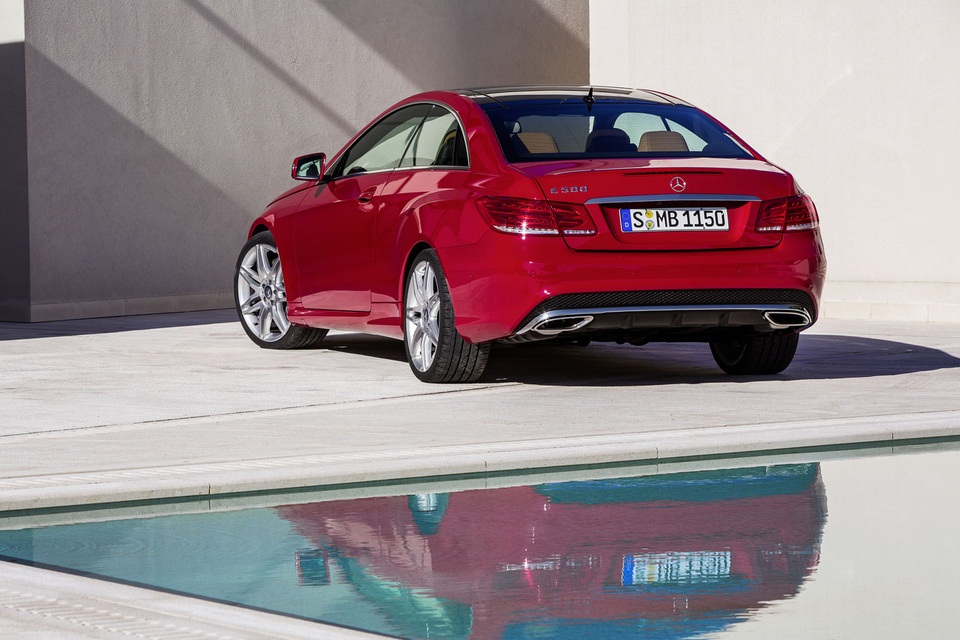
2014 Mercedes-Benz E-Class Coupe

Like the Saloon and Estate models, Mercedes-Benz has completely revised the Coupé and Cabriolet members of the E-Class family. New additions include powerful and efficient BlueDIRECT four-cylinder engines featuring pioneering injection technology and trend-setting assistance systems, which come under the heading "Intelligent drive". These are systems which can help to prevent accidents with crossing vehicles or pedestrians, Active Lane Keeping Assist or anti-glare, permanent high-beam headlamps, for example. Visually, both the Coupé and Cabriolet draw on the new Mercedes-Benz design idiom. Exclusive, luxurious equipment for sublime refinement underlines the close affinity with the E-Class family.

2014 Mercedes-Benz E-Class Coupe

2014 Mercedes-Benz E-Class Coupe

2014 Mercedes-Benz E-Class Coupe

2014 Mercedes-Benz E-Class Coupe

2014 Mercedes-Benz E-Class Coupe


The classic Coupé and the four-seater Cabriolet of the Mercedes-Benz E-Class are amongst the most desirable vehicles at the higher end of the mid-class segment. By combining intelligent, efficient technology with luxurious equipment that offers superb comfort, neither model comprises when it comes to indulging a passion for superlative driving enjoyment. That is why they are regarded as highlights of the successful E-Class family. The design of the exterior and interior alike is fresh and sharp, as befits many of the stand-out new technical aspects.

According to Dr Joachim Schmidt, member of the Management Board of Mercedes-Benz Cars and responsible for Sales and Marketing, "Three words sum up both the E-Class Coupé and the four-seater Cabriolet model: captivating, athletic, passionate. It is especially pleasing that the two vehicles also incorporate the most intelligent technology ever. This makes them true dream cars."

Design: e-motion at its best

The main feature of the new look Mercedes-Benz E-Class Coupé and Cabriolet is the revised front with new headlamps comprising a single headlamp lens over all functional elements. The headlamps are fitted with anti-dazzle LED lights as standard, with full LED technology now available for the first time in this class as an option. Flowing light elements within the headlamps reinforce the "twin-headlamp" look which is typical of the E-Class.

New front bumpers with a more pronounced V-shape and large air intakes considerably accentuate the dynamism of these agile vehicles. As a whole, the front with sports car radiator has an autonomous, sporty face, while at the same time emphasising the close affinity between the Coupé and Cabriolet and the new E-Class Saloon.

As a visible sign of this sporty car's rear-wheel drive, the muscular-looking rear wing has been retained. New tail lamps and a wide-effect rear bumper with "wing design" and chrome-look trim serve to discreetly underline the athletic appearance of these model series.

The Coupé has classic proportions with a long bonnet, elongated side line, flat roof line, and powerful tail end. Traditional stylistic features which render the Mercedes-Benz Coupé models unmistakeable define the striking lines of the two-door variant. For example, uninterrupted by a B-pillar, the side windows can be opened to their full extent.

The four-seater Cabriolet model also has fully retractable side windows, with a continuous shoulder line that ascends slightly as it runs from the front to the boot lid emphasising its clear proportions.

A fine interior

Mercedes-Benz has additionally updated the interiors of the E‑Class Coupé and Cabriolet, carefully coordinating them with the expressive exteriors. Inside the vehicles, stylish materials dominate alongside clean-cut surfaces and the two-part trim which stretches across the entire dashboard. It can be selected in a wood or aluminium look, thereby rounding off the high-quality overall impression made by each interior.

The kindred nature of the new E-Class family is indicated by an analogue clock between the redesigned air outlets, as well as by controls in silver chrome.

The interior is characterised by the redesigned centre console without selector lever, as well as a three-spoke multifunction steering wheel with DIRECT SELECT lever and shift paddles in conjunction with automatic transmission.

One special benefit of the new E-Class Cabriolet is that, thanks to the acoustic soft top with its particularly high-grade insulation, the vehicle has the lowest noise level in its class. The unique acoustic soft top ensures that even at high speeds, only very little wind noise is heard in the interior.

For exceptional comfort when driving with the top down, the speed-dependent AIRCAP system is available as an option. This reduces wind swirl within the vehicle interior and therefore noise levels, too. New: the AIRCAP system deploys automatically at speeds exceeding 40 km/h and the wind deflector in the front windscreen frame automatically retracts again below 15 km/h. This ensures that the E-Class Cabriolet appears at its purest and most alluring when driving slowly and when stationary. The draught-stop between the rear head restraints responds to the number of vehicle occupants (passengers in the rear are detected if the rear seat belts are in use). The positions of the extendable wind deflector in the windscreen frame and the draught-stop are then adjusted accordingly.

Also optionally available: AIRSCARF neck-level heating. This addition extends the cabriolet season by ensuring it is comfortable to drive with the top down, even when it is cold outside.

Limitless individual appointments

The Mercedes-Benz E-Class Coupé and Cabriolet offer virtually unlimited scope for individualisation. Examples include new interior colours and colour combinations such as deep-sea blue to contrast with silk beige in the interior. This brings a breath of fresh air to the exclusive ambiance of the two sportier E-Class models.

"Intelligent drive" with futuristic new assistance systems

As for the Saloon and Estate models, new assistance systems that combine comfort with safety have found their way into the Mercedes-Benz E-Class Coupé and Cabriolet. Mercedes-Benz refers to this development as "Intelligent drive".

One basis for all this is formed by state-of-the-art sensors such as a Stereo Multi-Purpose Camera in the vicinity of the rear-view mirror that provides a three-dimensional view up to around 50 metres in front of the vehicle. Intelligent algorithms merge the data from the stereo camera with data from installed radar sensors, performing an evaluation of three-dimensional visual information in order to detect vehicles that are driving ahead, oncoming or crossing, as well as pedestrians and a variety of traffic signs and road markings within a large field of vision. The algorithms also spatially classify moving objects.

As standard in the main markets, both the Coupé and Cabriolet models are fitted with COLLISION PREVENTION ASSIST, a radar-based collision warning system with adaptive brake assist systems. It helps to significantly reduce the risk of a rear-end collision. Also forming part of the standard equipment is ATTENTION ASSIST, which is now able to warn of inattentiveness and drowsiness across a wider speed range, and also inform the driver about their level of fatigue and the amount of driving time which has elapsed since their last break. It also offers an adjustable sensitivity level.

As for the Saloon and Estate models, a number of assistance systems are also optionally available which are either new or now feature significantly extended functions. The following is an overview of the innovations:
  • DISTRONIC PLUS with Steering Assist can help to take the burden off the driver when it comes to keeping the vehicle in its lane and also track traffic in tailbacks semi-automatically
  • for the first time, the Brake Assist system BAS PLUS with Junction Assist is able to detect crossing traffic and pedestrians too, and boost the braking power applied by the driver accordingly
  • the PRE-SAFE® Brake can detect pedestrians and initiate autonomous braking to avoid a collision at speeds up to 50 km/h
  • PRE-SAFE® PLUS can recognise an imminent rear-end collision. The driver of the vehicle following behind is warned by activation of the rear warning lights with increasing frequency (not in the USA and Canada). The PRE-SAFE® system then triggers occupant protection measures to reduce the forces to which occupants are subjected. It can also firmly apply the stationary vehicle's brakes in the event of a rear-end collision to prevent secondary accidents
  • Active Lane Keeping Assist can now detect when the adjacent lane is occupied, including detection of oncoming traffic. When there is the risk of a collision, the system can also prevent the vehicle from leaving its lane unintentionally, when continuous lines are present, by applying the brakes on one side. As such it makes the ideal supplement to Active Blind Spot Assist
  • Adaptive Highbeam Assist PLUS allows the main-beam headlamps to be kept on permanently without dazzling traffic by masking out other vehicles in the beams' cone of light
  • Active Parking Assist enables automated parking with active steering and brake control in both parallel and end-on spaces
  • in addition to speed limits, Traffic Sign Assist can now also detect and display no-overtaking zones and the respective signs signalling their end. In the case of signs imposing access restrictions, it can also provide visual and acoustic warnings
  • the 360-degree camera covers all four sides of the vehicle, thus enabling a uniform all-round view, including virtual bird's eye view - a top-down view of the vehicle and its immediate surroundings. Dynamic guide lines help with entering and leaving parking spaces as well as manoeuvring


Professor Dr Thomas Weber, Member of the Board of Management of Daimler AG, responsible for Group Research and Mercedes-Benz Cars Development: "The new E-Class represents a major step forward in every respect. The design elicits plenty of emotion, causing a stir in its segment. Its technical highlights are unique. For example, new assistance systems from the upcoming S-Class take the burden off the driver by automatically keeping the vehicle in its lane and also tracking traffic in tailbacks. For the first time, there are also systems that can prevent accidents involving crossing traffic or pedestrians. What is more, with its new engines the E-Class achieves optimum values in terms of efficiency, offers an internet-enabled infotainment system, and boosts safety when driving at night thanks to advanced LED headlamps and permanent high-beam with no dazzling. The E-Class is absolutely packed with high-tech features and altogether makes a very attractive package."

Powerful drive system delivering exemplary efficiency

There is a wide choice of powerful petrol and diesel engines for the Mercedes-Benz E-Class Coupé and Cabriolet. All are highly efficient and equipped with the ECO start/stop system. Six petrol engines are available ranging in output from 135 kW (184 hp) to 300 kW (408 hp) and there are also three diesel engines ranging from 125 kW (170 hp) to 195 kW (265 hp).

A new element is the BlueDIRECT four-cylinder petrol engine with spray-guided direct injection, based on the same trend-setting technology used in the latest generation of six and eight-cylinder engines from Mercedes-Benz. Its technology package includes fast-acting piezo injectors for multiple injection, quick multi-spark ignition, turbocharging, fully variable camshaft adjustment on the inlet and exhaust side, as well as a controlled oil pump.

The BlueDIRECT four-cylinder engine also sees the world's first use of the stratified lean burn process in combination with exhaust-gas turbocharging and external high-pressure exhaust gas recirculation. As a result the Coupé and Cabriolet achieve outstanding emission and consumption figures. In addition, the new BlueDIRECT four-cylinder petrol engines already meet the EU6 standard which will apply from 2015.

Also making up the BlueDIRECT petrol engine range are the familiar V6 and V8 engines. A new addition is the six-cylinder engine, which is being offered for the first time as the E 400 with biturbo drive. With its performance potential and enormously high levels of torque at low engine speeds, this engine sets new standards in the six-cylinder sector and also meets the EU6 emissions level.

The six-cylinder diesel engine for the Coupé and Cabriolet is available as BlueTEC models fitted with the established SCR (selective catalytic reduction) technology and as such meets the EU6 emissions standard.

Mercedes-Benz will also offer two transmissions for the E-Class Coupé and Cabriolet in the future: a six-speed manual transmission with high ease of shifting and short shift travel, and the 7G-TRONIC PLUS automatic transmission with DIRECT SELECT lever and DIRECT SELECT shift paddles. This latest stage of evolution of the 7G-TRONIC PLUS provides significant advantages in terms of efficiency and ease of maintenance.

A new feature is the short-term M mode. The benefit of this: if the driver has shifted up or down manually, after a set period of time the transmission independently switches back to the fuel-efficient automatic shift mode.

The suspension - the basis for superior handling

As standard, the Coupé and Cabriolet are fitted with the AGILITY CONTROL suspension with selective damping system. The shock absorbers adapt to road surface conditions, thereby ensuring a high level of ride comfort. Sporty handling is enabled while still delivering the comfort on long journeys that is typical of the brand.

An AGILITY CONTROL sports suspension with selective damping system and firmer damping characteristics is available as an alternative along with the Dynamic Handling package. The latter offers a choice of driving mode settings for sportier accelerator pedal characteristics and gear shift points, as well as electronic damping control. This allows the driver to adjust the damping to their requirements at the touch of a button, depending on whether they want a comfortable or sporty ride.

Like the Saloon and Estate models, in future the Mercedes-Benz E-Class Coupé and Cabriolet will be equipped with the electromechanical Direct-Steer system as standard. This combines speed dependent power assistance from speed-sensitive steering systems with a steering ratio that varies with the steering angle. The electromechanical Direct-Steer system ensures a more direct response, comfortable handling and high levels of steering comfort across all speed ranges. It also offers the potential to make considerable savings by only calling up energy for the steering action and making innovative assistance systems, such as Active Parking Assist systems, possible for the first time.

High-quality appointments

The Coupé and Cabriolet models come with a comprehensive range of high-quality equipment as standard, including modern infotainment systems. These help to keep the driver up to date while on the road in terms of what is happening around the world or in the office. The systems also enable music to be enjoyed or also optionally offer powerful navigation solutions as well as an internet connection.

The Audio 20 CD Radio comes as standard equipment. It features a 14.7 cm TFT colour display, twin tuner and MP3-capable CD player as well as a USB connection in the centre armrest. Bluetooth®-capable devices can also be connected, and SMS text messages displayed.

Optionally the Audio 20 CD can be combined with a six-disc CD changer as well as the reasonably-priced, entry-level Becker® MAP PILOT navigation solution, which can also be retrofitted.

Alternatively, Mercedes-Benz offers the COMAND Online multimedia system with 17.8 cm high-resolution colour display, internet connection, hard-disc navigation and emergency call feature, which can also be combined with a six-disc DVD changer. COMAND Online provides internet access enabling customers to surf the web while the car is stationary or call up a Mercedes-Benz app, whose particularly fast page loading and simple operation make it suitable for use while driving. Integrated apps include Google™ Local Search and Weather and the facility for downloading a route which has previously been configured on a PC using Google Maps and transmitted to the car. In addition, apps for Google™ Streetview as well as Google™ Panoramio and other apps are also available.

Articles Source : Netcarshow

2014 Mercedes-Benz E-Class Cabriolet

Mercedes-Benz has restyled the Coupe and Cabriolet members of the E-Class family for the 2014 model year. The bold new styling is combined with sophisticated new assistance systems which are part of Mercedes-Benz "intelligent drive." These new systems include technology that can help prevent accidents with crossing vehicles or pedestrians as well as an enhanced version of Active Lane Keeping Assist. Visually, Coupe and Cabriolet have been brought in line with the new Mercedes-Benz design idiom. These models also feature exclusive, luxurious appointments for refined driving, which are hallmarks of the entire E-Class family. The 2014 E-Class Coupe and Cabriolet go on sale in the U.S. in Summer 2013.

2014 Mercedes-Benz E-Class Cabriolet

2014 Mercedes-Benz E-Class Cabriolet

2014 Mercedes-Benz E-Class Cabriolet

2014 Mercedes-Benz E-Class Cabriolet

2014 Mercedes-Benz E-Class Cabriolet


The classic Coupe and the four-seat Cabriolet versions of the Mercedes-Benz E-Class are among the most coveted vehicles in the premium medium-size segment. With intelligent and efficient technology as well as luxurious and comfortable appointments, both are uncompromisingly designed for passionate driving enjoyment. They are therefore regarded as emotionally appealing highlights of the successful E-Class family. Both on the outside and inside the design is fresh, sharpened and so ideally reflects the many new technical features.

Dr. Joachim Schmidt, Executive Vice President Sales and Marketing Mercedes- Benz Cars: "Three words suffice to very briefly characterize the Coupe and the four-seater Cabriolet: stunning, athletic, passionate. Especially gratifying is that both cars also offer the most intelligent engineering that currently can be had. This makes both of them genuine dream cars."

Design: E-motional appeal in top form

The new look of the E-Class Coupe and Cabriolet is accentuated by the redesigned front end with new headlamps which contain all functional elements within a single lens. The headlamps are fitted with partial LED lights as standard, while full LED technology is available as an option for the first time in this segment. Flowing light elements within the headlamps ensure that the "four-eye" look typical of the E-Class is retained.

The new, more V-shaped front bumpers with large air intakes clearly accentuate the athletic character. The bold front end puts a distinctive, sporty face forward, but at the same time emphasizes the close relationship of the Coupe and Cabriolet with the redesigned E-Class Sedan.

The rear fenders, whose powerfully muscular shape has been retained, lend visual emphasis to the rear-wheel drive of the sporty cars. New tail lights and a wide rear bumper with a chrome trim element additionally underscore the aggressive appearance of these models.

The proportions, with a long hood, extended side line, flat roof and powerful rear end, are those of a classic coupe. Traditional styling features that make the Mercedes-Benz Coupes unmistakable - for instance the layout of the fully retractable side windows, which is unbroken by B-pillars - lend emphasis to the distinctive lines of the two-door car.

Fully retractable side windows are characteristic also of the four-seater Cabriolet and give emphasis to the clear proportions with a gently rising shoulder line from the front to the trunk lid.

Elegant interior

Mercedes-Benz also has restyled the interior of the 2014 E-Class Coupe and Cabriolet and tastefully matched it to the expressive exterior. Fine materials, two-piece trim stretching across the entire dashboard, and clean surfaces dominate in the interior.

All models in the entire 2014 E-Class family feature an analog clock between the redesigned air vents and console switches are now finished in chrome.

The interior is further characterized by a redesigned center console without a gear selector lever as well as a new three-spoke multifunction steering wheel with DIRECT SELECT shift lever and shift paddles. This makes room for additional storage space and larger cup holders.

A special highlight of the new Mercedes-Benz E-Class Cabriolet is its acoustic soft top with high-grade insulation, giving it the lowest noise level in its class. The unique acoustic cabriolet soft top ensures that little wind noise penetrates the interior even at high speeds.

With the top down, the standard AIRCAP, which reduces interior turbulence and wind noise, ensures exceptional convertible driving comfort, especially in the rear seat. Now at speeds over 25 mph the AIRCAP system deploys automatically, and at speeds less than 10 mph the wind deflector in the windshield frame is automatically retracted again to present the Mercedes-Benz E-Class Cabriolet in its purest and most beautiful form during slow driving and at a stop. The wind deflector between the rear head restraints responds to the number of occupants, which it automatically recognizes by the buckled rear seat belts, and adjusts the position of the extendible wind deflector in the front and rear accordingly.

The available AIRSCARF neck-level heating extends the convertible season by making comfortable top-down driving possible even at low exterior temperatures.

Limitless individual appointments

E-Class Coupe and Cabriolet offer virtually unlimited possibilities for individual configuration. New interior colors and color combinations, such as blue with contrasting beige boldly brings a breath of fresh air to the exclusive ambience of the two E-Class athletes.

"Intelligent drive" with new assistance systems from the future

As in the Sedan and Wagon, new assistance systems that combine comfort and safety also are being introduced in the 2014 E-Class Coupe and Cabriolet. Mercedes-Benz refers to all this as "intelligent drive."

The basis for this is formed by state-of-the-art sensors - for instance a Stereo Multi-Purpose Camera in the vicinity of the rearview mirror that produces a three-dimensional view of the area up to 165 feet in front of the vehicle, and is able to monitor the overall situation ahead up to a range of 1,640 feet. Part of the Driver Assistance Package, intelligent algorithms combine the data of the stereo camera with that of the installed radar sensors. They perform an evaluation of this three-dimensional visual information in order to detect vehicles that are driving ahead, oncoming or crossing, as well as pedestrians and road markings within a large field of vision, and to carry out a spatial classification of moving objects.

The 2014 Coupe and Cabriolet are fitted with standard COLLISION PREVENTION ASSIST, a radar-based collision warning system with adaptive brake assist systems, which helps to significantly reduce the risk of a collision. Also part of the standard equipment is ATTENTION ASSIST, which is now able to warn of inattentiveness and drowsiness across a wider speed range, and also inform the driver about his level of fatigue and the amount of driving time which has elapsed since the last break. It also offers an adjustable sensitivity level.

Optionally available on all 2014 E-Class Models are a number of assistance systems which are either new or now feature enhanced functions. The following is an overview of the innovations:
  • DISTRONIC PLUS® with Steering Assist can help the driver keep the vehicle centered in its lane and can semi-autonomously track lines of traffic.
  • For the first time, the Brake Assist system BAS PLUS® with Intersection Assist is able to detect crossing traffic and pedestrians too, and boost the braking power applied by the driver accordingly.
  • The PRE-SAFE® Brake can detect pedestrians and initiate autonomous braking to avoid a collision at speeds up to 30 mph
  • PRE-SAFE® PLUS can recognize an imminent rear-end collision, then prompts the PRE-SAFE® system to trigger occupant protection measures to reduce the forces to which occupants are subjected. It can also firmly apply the stationary vehicle's brakes in the event of a rearend collision to prevent secondary accidents.
  • The Active Lane Keeping Assist now can detect when the adjacent lane is not clear, including when it is occupied by oncoming traffic. If a collision threatens, even if the lane marking is not a solid line the system can prevent the vehicle from leaving its lane unintentionally by applying the brakes on one side. It thus optimally supplements the Active Blind Spot Assist.
  • Active Parking Assist enables automated parking with active steering and brake control in both parallel and perpendicular spaces
  • The 360-degree camera covers all four sides of the vehicle and enables a seamless all-around view including a virtual bird's-eye perspective - with a top view of the vehicle and its direct surroundings. Dynamic guide lines are a help when entering and leaving parking spaces and maneuvering.

Professor Dr. Thomas Weber, Member of the Board of Management of Daimler AG, responsible for Group Research and Mercedes-Benz Cars Development: "The new E-Class makes a big step forward in every respect. With an emotionally appealing design it provides for fresh highlights in its segment. And in technical respect it offers unique things. They include new assistance systems from the future S-Class which, for example, relieve driver stress with steering assist, DISTRONIC PLUS® and for the first time also can prevent accidents with crossing vehicles or pedestrians. In addition, the EClass achieves best ratings in the area of efficiency, offers an internet-capable cloud-based infotainment system and improves night-time driving safety with state-of-the-art LED headlamps. So the E-Class is a veritable high-tech package - a very attractively packaged one at that."

Drive system: high-performing and a model of efficiency

All the available engines for the 2014 E-Class Coupe and Cabriolet now feature an ECO start/stop system and are highly efficient. The E350 features a directinjection V6 gasoline engine with 302 hp and 273 lb ft of torque. The E550 is powered by a twin-turbo direct-injection V8 producing 402 hp and 443 lb-ft of torque.

The E350 Coupe is also available in the U.S. with 4MATIC All-Wheel-Drive. The electronically-controlled system displays an impressive level of traction on all manner of terrain, raises active safety and offers an outstanding degree of driveline refinement.

Mercedes-Benz offers a 7-speed automatic transmission with DIRECT SELECT lever and shift paddles. This latest version of this transmission provides significant advantages in terms of efficiency and ease of maintenance. A new feature is the short-term 'M' mode. If the driver has shifted up or down manually, after a set period of time the transmission independently switches back to the fuel-efficient automatic shift mode.

The suspension - the basis for superior handling

The 2014 E-Class Coupe and Cabriolet feature the AGILITY CONTROL suspension with selective damping system. Its shock absorbers adapt to the condition of the road surface and ensure sporty handling and long-distance comfort typical of Mercedes-Benz.

Alternatively available are the AGILITY CONTROL sports suspension with selective damping system and more tautly tuned dampers as well as the ADVANCED AGILITY package, which offers electronic damping control along with a program for selecting sportier accelerator characteristics and transmission shift points. With this, at the push of a button the driver can adjust the damping to his requirements depending on whether he wants to drive in a comfortable or sporty style.

Like the Sedan and Wagon, the Coupe and Cabriolet are equipped with an electromechanical Direct-Steer system as standard. It combines the speeddependent power assistance of speed-sensitive steering with a variable ratio across the steering angle range. The electromechanical Direct-Steer system ensures more direct steering response, comfortable handling, and high levels of steering comfort across all speed ranges. It also provides considerable Page 7 savings potential, since energy is only required during steering action, and makes innovative assistance systems such as Active Parking Assist possible.

High-quality appointments

The 2014 E-Class Coupe and Cabriolet feature a comprehensive selection of premium equipment as standard. It includes a modern range of infotainment systems that allow the driver to keep up to date on what is happening around the world, or in the office, while on the road.

Standard equipment includes the COMAND system featuring a 7-inch highresolution color display, sound system w/ AM/FM/WB radio, in-dash DVD/CD player, in-dash memory card slot, auxiliary input jack and Bluetooth interface for hands-free calling.

Additionally, Mercedes-Benz offers the mbrace2 system as standard equipment. mbrace2 provides drivers top-of-the-line features related to safety, infotainment, personal assistance and vehicle care. mbrace2 creates a truly networked vehicle offering open Internet access and custom versions of popular apps, including Facebook, Yelp and Google Local Search designed specifically for in-vehicle use - called Mercedes-Benz Apps. It also includes a solution to remotely update software via cloud networks ensuring that mbrace2 users always have the latest app versions in their vehicles and at their fingertips. Sensible user design and limited functionality of these Internetbased apps ensures that they provide maximum utility without unnecessary distraction when the vehicle is in motion; certain features are not available for use when the vehicle is in motion.

Articles Source : Netcarshow

2013 Porsche Cayenne Turbo S


The new Porsche Cayenne Turbo S assumes top position in the Porsche SUV model range with its engine power of 550 hp (405 kW). With its complex active chassis, the top athlete in SUV clothing surpasses the driving performance of many sports cars. All of the basic Cayenne properties such as versatile offroad capabilities, high ride comfort and superior towing power have been preserved without exception. Its NEDC fuel consumption of 11.5 litres per 100 km is the same as that of the Cayenne Turbo, which makes it more fuel-efficient in relation to its engine power. The new Turbo S model has an extra 50 hp of power compared to the Cayenne Turbo, as well as a torque boosted from 700 Nm to 750 Newton metres, and it converts them into faster acceleration and a higher top speed. The sprint from zero to 100 km/h takes just 4.5 seconds (-0.2 seconds), and the SUV accelerates to a top speed of 283 km/h (+ 5 km/h).

2013 Porsche Cayenne Turbo S

2013 Porsche Cayenne Turbo S

2013 Porsche Cayenne Turbo S

2013 Porsche Cayenne Turbo S

2013 Porsche Cayenne Turbo S


The Porsche Cayenne Turbo S was systematically configured for maximum dynamic performance. Therefore, it incorporates all relevant control systems as standard equipment. From the Cayenne Turbo it takes the combination of an air suspension and active PASM damping control. Then there is Porsche Dynamic Chassis Control (PDCC), which reduces the roll angle in curves to practically zero, improving agility and comfort equally. Porsche Torque Vectoring Plus (PTV Plus), which is also standard, operates with torque vectoring at the rear wheels together with an electronically controlled rear differential lock, which improves traction and therefore offers more agility in every driving situation. The new Cayenne Turbo S is also equipped with the Sport Chrono package as standard.

The exterior and add-on equipment of the Porsche Cayenne Turbo S live up to the high standards of a top model. Numerous exterior features such as the air inlet screens, headlight housings and mirror parts are painted in high-gloss black. The standard 21-inch 911 Turbo II wheels with coloured Porsche badges were exclusively designed for the Cayenne Turbo S; their inside surfaces are painted in high-gloss black.

Porsche designers created bi-colour leather packages in new colours and colour patterns specifically for the new Porsche Cayenne Turbo S. These interior features are available in black/carrera red or black/luxor beige colour combinations. The bi-colour leather packages that are reserved for the new top model were extended by adding decorative seams in the contrasting colours carrera red and luxor beige. The Carbon interior package complements the leather features and highlights the sophistication of vehicle and materials.

In Germany, the Porsche Cayenne Turbo S is priced at 151,702 euros including VAT and deliveries begin in January 2013.

Articles Source : NetcarShow